

ATO Debt Enforcement Activity Increases in 2026 — What It Means for Small Business Owners

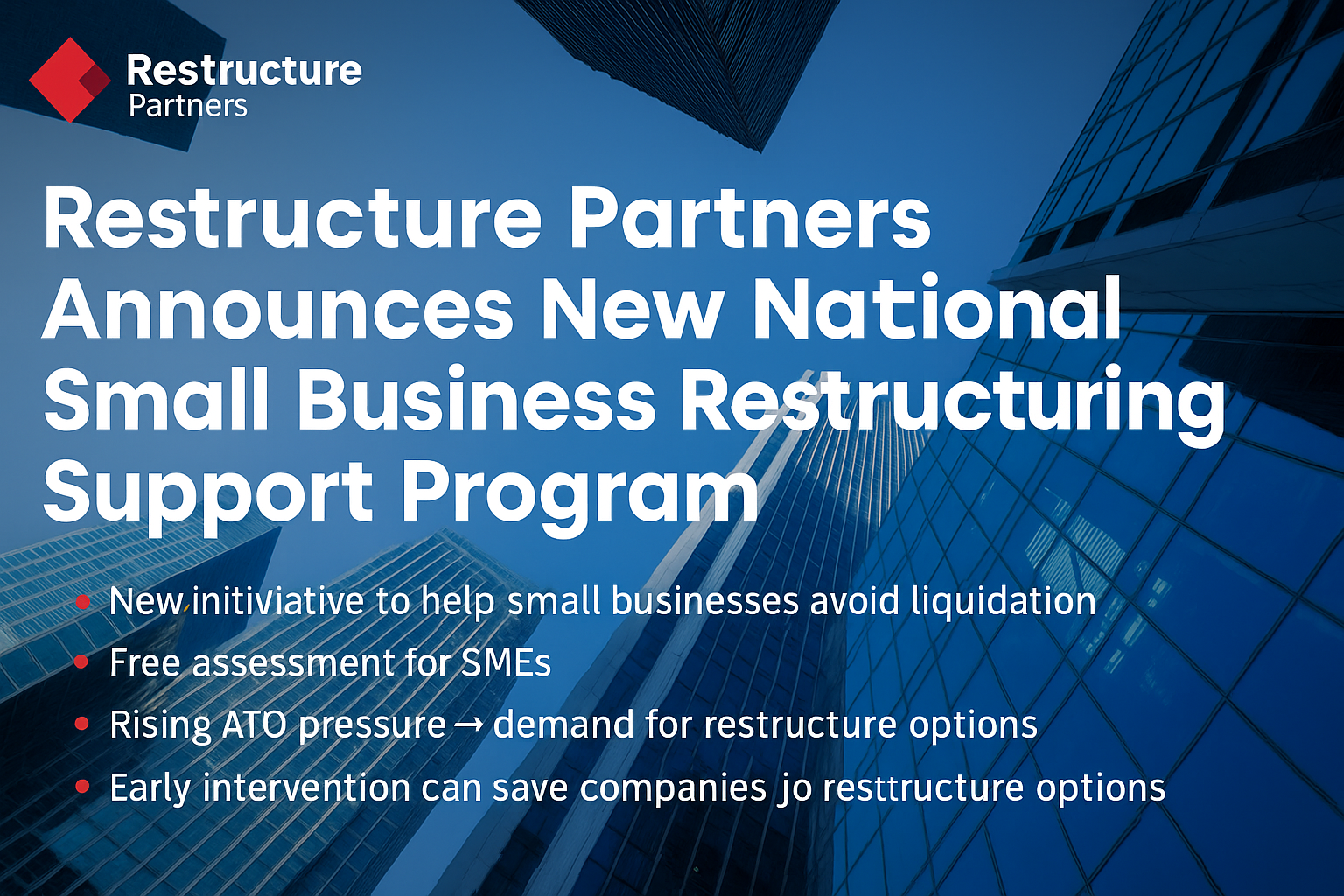
Restructure Partners
The Australian Taxation Office is not waiting. After several years of deliberate restraint during and after the pandemic.
Australian Taxation Office is not waiting. After several years of deliberate restraint during and after the pandemic, the tax office is now deploying its full enforcement toolkit against businesses.”
SYDNEY, NSW, AUSTRALIA, April 10, 2026 /EINPresswire.com/ -- The Australian Taxation Office is not waiting. After several years of deliberate restraint during and after the pandemic, the tax office is now deploying its full enforcement toolkit against businesses carrying outstanding tax debts — and the pace of that enforcement activity reached a new post-pandemic high in late 2025 and is continuing to escalate into 2026.— Restructure Partners
ReStructure Partners helps Australian directors navigate every stage of ATO and financial distress, from overdue BAS and tax debt through to Director Penalty Notices, restructuring solutions, voluntary administration, and broader insolvency options. The firm's practitioners are regularly engaged to assist directors in responding to ATO enforcement actions — and the consistent message they deliver is that the time to act was yesterday. The firm works with directors to understand their specific ATO obligations and identify which responses may assist, depending on the circumstances.
The ATO's Enforcement Toolkit
The ATO has a substantial set of enforcement tools that it is applying with increasing frequency in 2026. Understanding what these tools are — and what the consequences of each might be — is important for any director carrying outstanding tax obligations.
Director Penalty Notices are perhaps the most significant tool from a personal perspective. A DPN creates direct personal liability for the director in respect of certain company tax debts. The two types — lockdown and non-lockdown — carry materially different consequences, and the distinction between them is critically important. A non-lockdown DPN provides a 21-day window for qualifying action. A lockdown DPN attaches personal liability without any opportunity for relief through subsequent corporate action.
Garnishee notices can have an immediate operational impact. When the ATO serves a garnishee notice on a business's bank, the bank is legally required to pay amounts from the account directly to the ATO. For businesses operating on thin working capital, this can make it impossible to meet wages, supplier payments, or other obligations within days.
Statutory demands create a 21-day window for payment before a presumption of insolvency arises, which can then be used to support a winding-up application.
Winding-up applications filed by the ATO in the courts represent the most aggressive enforcement tool available to the tax office. A winding-up application that is not responded to can result in the appointment of a court-ordered liquidator — a process entirely outside the directors' control.
Detailed information on Director Penalty Notice types and response options is available at https://restructurepartners.com.au/director-penalty-notice.
The Best Response to ATO Enforcement
The most effective response to ATO enforcement action depends on the specific tool being used and the broader financial circumstances of the business. In all cases, prompt engagement with a qualified restructuring adviser is the critical first step.
Directors who receive a DPN have a defined and limited window for action. Those who receive a garnishee notice need to assess immediately whether the loss of the seized funds will make it impossible to continue operating and, if so, what steps should be taken. Directors who receive a statutory demand or a winding-up application need to assess whether they can satisfy the debt, dispute it, or respond through a formal insolvency process.
In many cases, small business restructuring or voluntary administration may assist in addressing the broader financial position of a business under ATO enforcement, depending on the circumstances. These processes can, in certain situations, provide relief from enforcement action and create a framework for resolving the company's debts in an orderly way.
Prevention Remains the Best Strategy
The most effective response to ATO enforcement is to avoid reaching the enforcement stage in the first place. Directors who engage proactively with the ATO regarding outstanding tax obligations — rather than avoiding contact and allowing arrears to compound — are more likely to secure manageable payment arrangements.
Where ATO debts cannot be managed through payment plans alone, directors should consider whether formal restructuring options may provide a more comprehensive resolution. Further guidance on ATO debt management is available at https://restructurepartners.com.au/ato-debt-help.
ReStructure Partners works with Australian directors and business owners experiencing financial pressure, including ATO debt, cash flow issues, and creditor stress. The firm provides support across the full spectrum of financial distress, from early-stage tax arrears and compliance issues through to Director Penalty Notices, small business restructuring, voluntary administration, and other insolvency pathways, depending on the circumstances.
Contact:
ReStructure Partners
https://restructurepartners.com.au
###
Restructure Partners
Restructure Partners
+61 468 061 936
email us here
Legal Disclaimer:
EIN Presswire provides this news content "as is" without warranty of any kind. We do not accept any responsibility or liability for the accuracy, content, images, videos, licenses, completeness, legality, or reliability of the information contained in this article. If you have any complaints or copyright issues related to this article, kindly contact the author above.
